Organizing the workspace
· 4 min
Organizing the workspace by integrating people, furniture, machines, space, sound and light is one of the great challenges of the corporate world.
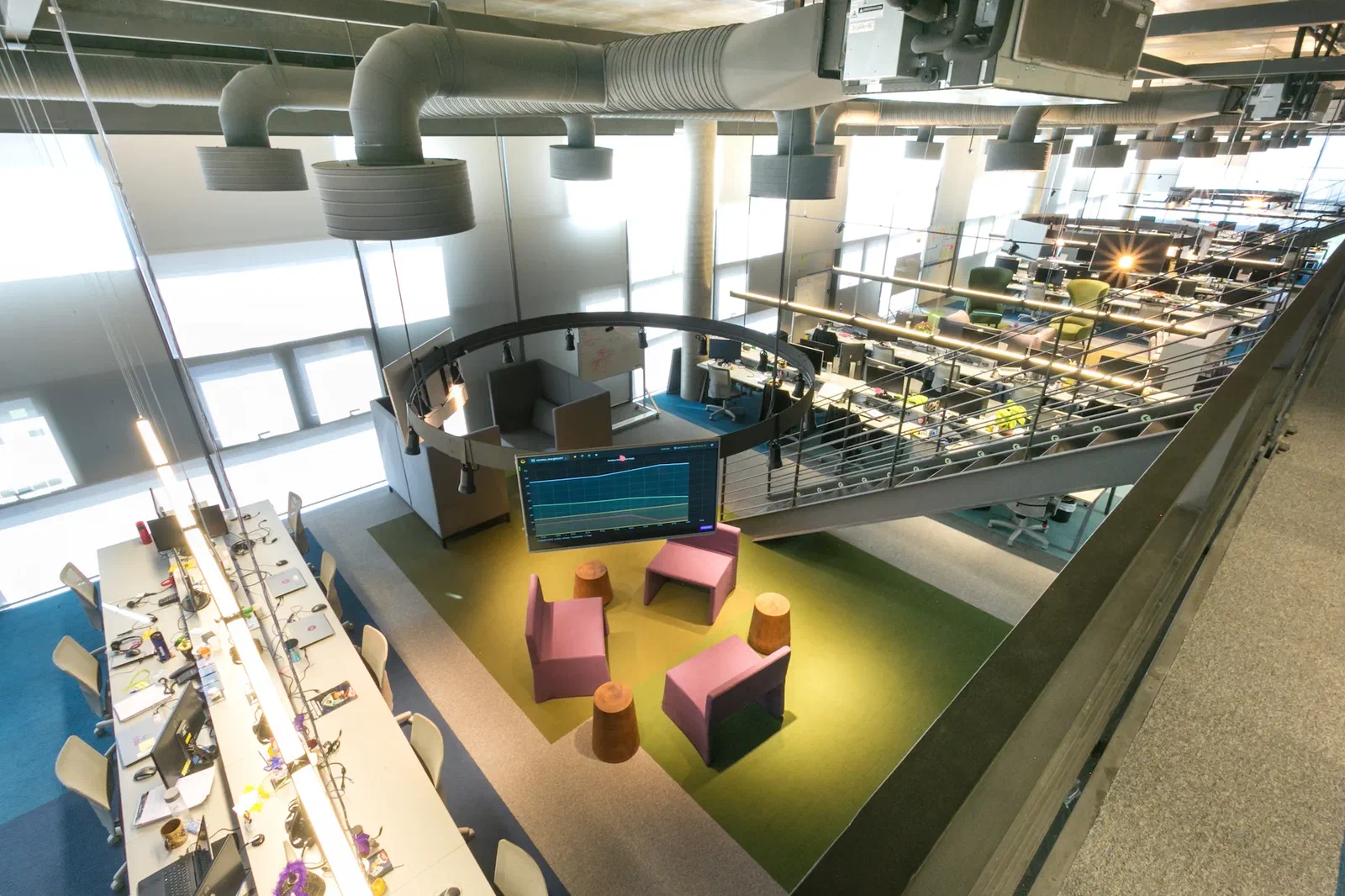
A challenge to be overcome in modern service societies.
In the gigantic service society that the world economy has become, economic goods are no longer born on assembly lines and industrial facilities.
Nearly all production now happens in offices, through the planned and harmonious integration of people, furniture, machines, space, sound and light. Organizing the workspace by effectively integrating the different forces that coexist within it, resulting in the highest productivity levels (starting from employee satisfaction), is one of the great challenges the corporate world has ahead. In short: creating environments where people work happy, motivated and healthy.
Broadly speaking, we can group the different forces that coexist in an office into 6 groups. The main one is people – the human force. Since every organization is geared toward making that force produce more and better, let’s look at the other 5 blocks.
Space
An office can run into problems if it has too much or too little space. Too much area creates a series of relationship and communication friction points. Too little area causes behavioral saturation, resulting in a series of productivity sacrifices. In reality, the office must have a necessary maximum limit and a bearable minimum.
Equipment
We can observe that in recent years there has been a complete transformation of offices. Today the office has become an intelligent hub of people, equipment and services. The most modern buildings are called “intelligent buildings,” because technology and IT have transformed the concept of human work into: efficiency, quality, competence and speed.
The price per square meter keeps getting more expensive, while the human element becomes increasingly specialized, so the workplace must match the professional activity. The machines and technology that today make up an office’s utility items are multiplying. Correctly installing this equipment is important for preserving the company’s assets and getting the best return on the capital/performance invested in the equipment.
Infrastructure and services
Infrastructure: we can say that the entire set of installations necessary for an office to function well is basically made up of electrical installations and the floor raceway system, including standard power, stabilized power, telephony and data networks. Therefore, the larger and more distributed the installation, the better the performance and the combination of flexibility of the layout and equipment.
Furniture
There are countless types of desks and chairs, but the best combination of these items allows for substantial savings in space, mobility, flexibility and comfort.
This combination is achieved through diagnostic work, or “Space Planning.” Without standardization or occupancy norms, it is extremely difficult to achieve an effective project. Areas with a very high concentration of desks and people end up causing distraction at work, preventing employees from performing their job in the best way.
We can state that for every 1 hour of work, at least 10 minutes are lost due to distraction in this type of work environment, which results in the loss of at least 1 hour per day. Adding up these hours over the course of the year creates the need for more hiring to make up for the productivity deficit — that is, a substantial and entirely unnecessary increase in costs.
Environmental comfort
An office’s climate is established entirely through adequate solutions for sound, light and air/temperature issues.
Acoustics, for example, is one of the most important factors when it comes to concentration.
Research shows that people exposed to noise cannot produce intellectual work requiring concentration. In addition, noise is one of the factors that cause stress in people, resulting in a loss of work quality and also various health problems, which can be avoided through a proper space organization project.
Thermal comfort is another important item in a project’s set of measures. Air conditioning, besides being able to maintain uniform temperature, allows employees to work in an enclosed environment, preventing dust, wind and outside weather from altering the indoor climate.
Balance between natural and artificial lighting. This point needs to be very well calibrated. For example, direct sunlight causes not only a temperature increase but also, over time, visual stress for employee users. The same happens with artificial lighting coming from above.
In conclusion, we can state with complete confidence that workspace organization is one of the strongest elements influencing corporate success. That is because its impact on the most important element of the process — the human being — is decisive for these results to happen.