What Drives the Return to In-Person Work?
· 2 min
Gensler data shows that employees want to return to the office more often if it offers the right experiences.
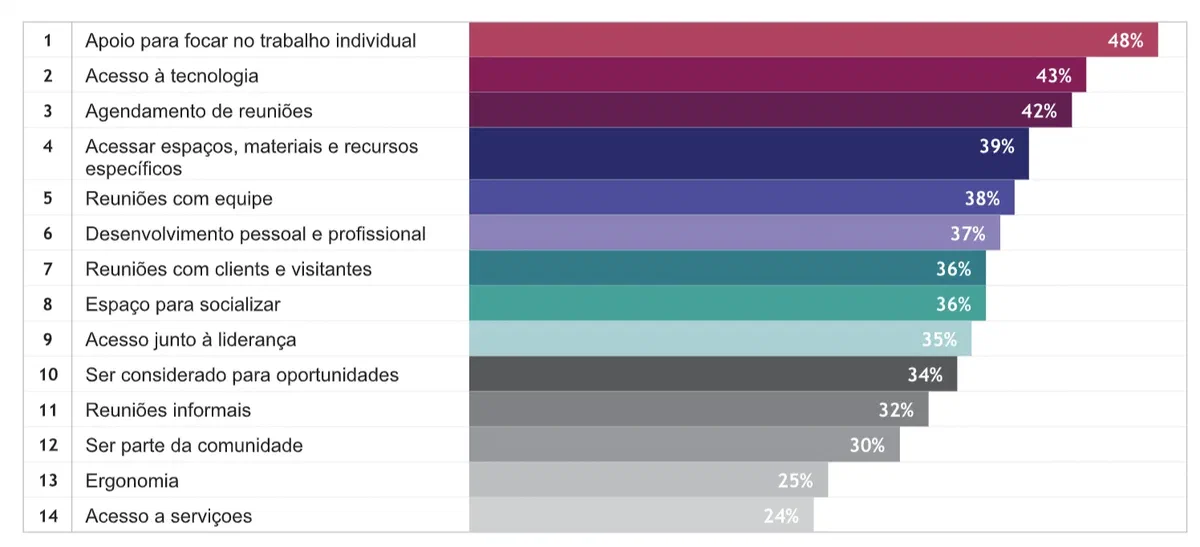
Gensler’s latest data on workplace performance highlights that employees want to return to the office more often if it offers the right experiences. The most important reason for coming into the office is “to focus on my work,” according to a survey of 2,000 US employees. This represents a shift from data collected during the pandemic, which placed greater emphasis on in-person work with teams/colleagues.
The new data suggests that workplace effectiveness for solo work has also hit its lowest level in years. This poses a fundamental challenge for worker performance and their interest in returning to the office. It’s worth noting that in several sectors workers spend at least a third of their time working alone, so this support is a crucial foundation for a good workplace experience.
Return to the Office – Key User Demands
Effective workplaces must blend solutions that support individual, virtual and collaborative performance.
The office has become more effective for support activities that require interactive engagement, such as socializing and in-person collaboration. However, the earlier data reveals that the office still falls short in environments that support focus and concentration. Most office employees still spend most of the day working alone at their desks. As such, the ability to concentrate remains a crucial factor for performance.
Although workers are increasingly mobile, they continue to spend a significant amount of their time working at their desks. This points to an opportunity to improve office effectiveness and provide greater access to spaces that support both independent and collaborative work.
In short, organizations must provide an ecosystem made up of diverse spaces to support a new mix of work typologies. This is the great draw to motivate employees to return to in-person work.