The Impact of Poorly Planned Corporate Construction on Business in 2026
· 4 min
In 2026, corporate construction stopped being just engineering: when planning fails, the impact hits operations, productivity and company finances.
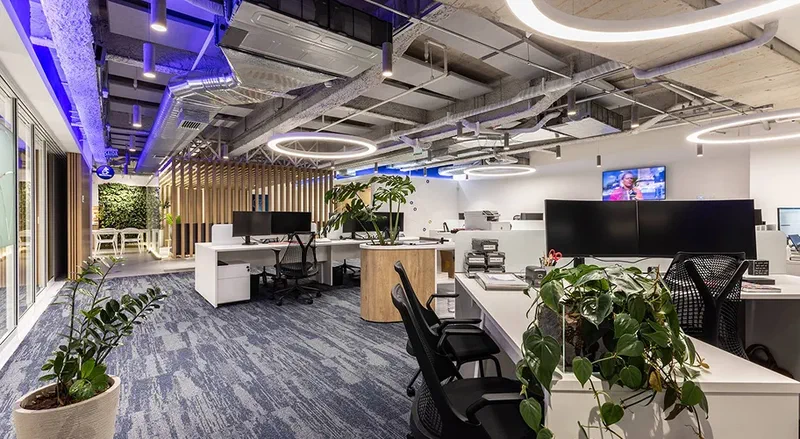
In 2026, a corporate construction project has definitively stopped being “just engineering” and has become a business decision. When planning fails, the impact doesn’t only show up in the schedule. It spreads through operations, team productivity, the company’s image and the project’s financial predictability.
More mature companies already understand this. For them, delays, rework and improvisation aren’t “construction problems.” They are management and strategy problems.
What changed in the corporate landscape, and why it raised the bar
The corporate environment of recent years has transformed, and that has completely changed how corporate construction projects need to be run.
Tighter deadlines and short execution windows
Move dates, openings, expansions and team integrations are rarely flexible. Construction no longer has slack. It has to fit around business decisions that have already been made.
Operations that can’t stop
Most renovations and fit-outs happen while the company keeps running. This requires phasing, control of interferences, access planning and extremely well-calculated decisions.
Decisions driven by efficiency and predictability
In 2026, construction needs to keep pace with the business. When it doesn’t, the company slows down, loses productivity and accumulates risk.
Where the mistake usually starts
The classic signs of a poorly planned corporate construction project
A poorly planned corporate construction project usually shows signs early on. The most recurring ones are:
- A generic schedule, with no clear phases and no plan for coexisting with operations
- Weak integration between design, execution and the reality of the site
- Insufficient site visits, with decisions made only “on paper”
- Scope that changes without governance, where the exception becomes the rule
- Underestimating the construction’s impact on the company’s day-to-day, such as noise, circulation, security and the flow of people
On their own, these points seem small. Together, they generate a cumulative effect of cost, delay and wear.
Direct impacts on the business
When construction stops being a solution and becomes a risk
1. Interference with operations and a drop in productivity
When the company keeps running, an unplanned construction project tends to generate uncontrolled noise, dust in sensitive areas, improvised circulation blockages and avoidable safety risks. The real impact isn’t only on the site, but in the productive hours that stop existing within the company.
2. Delays that cost more than the construction itself
In corporate construction projects, delay means postponed expansion, teams stuck in temporary layouts, postponement of new units or operations, and internal wear between areas such as HR, Facilities, IT and Operations. The delay stops being technical and becomes strategic.
3. Rework and rising costs from late decisions
Without robust planning, important decisions get pushed into execution. This generates emergency purchases, route changes in installations, incompatibilities between disciplines and rework on services already completed. The budget loses predictability and control weakens.
4. Impact on internal climate and culture
Corporate construction is also experienced by the people who occupy the space. A lack of control and communication generates stress, lower morale, a sense of improvisation and resistance to change. The space, which should support the business, ends up generating internal friction.
5. Risk to the company’s image
When the construction is visible to clients, partners and visitors, the problems become reputational. The sense of “never-ending construction,” disorganization and poor governance directly affects brand perception. In mature companies, image and operations go hand in hand.
Planning stopped being a stage. It became a method.
Planning a corporate construction project isn’t about creating a pretty schedule. It’s adopting a management method, which usually involves:
- a realistic, phased schedule
- mapping interferences between construction and operations
- clear governance for scope changes
- decisions based on site visits and a real reading of the space
- ongoing alignment with client leadership on deadline, risk and impact
At Easy Construtora, this type of project is handled with predictability, standards and accountability for the outcome. The goal isn’t just to deliver a space, but to enable the client’s business to operate and grow.
In 2026, improvisation is costly
Poorly planned corporate construction projects compromise growth, stall operations and generate impacts that go far beyond the site. Planning well isn’t excessive caution. It’s responsibility toward the client’s business.
If a company is evaluating a corporate construction project, the starting point shouldn’t just be “how much does it cost to build,” but rather how to guarantee schedule, predictability and control from start to finish.