Architecture and High-Performance Corporate Projects
· 3 min
The high-end office has become a living, measurable system: technology, sustainability and human experience transforming design and construction.
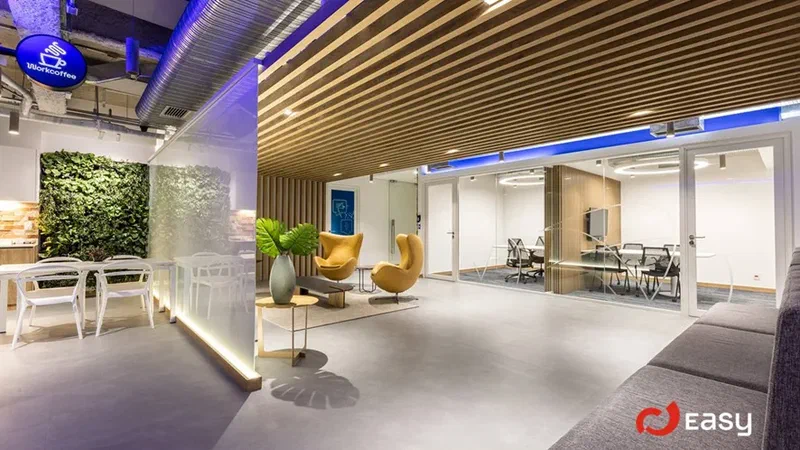
The high-end office has stopped being “layout + finishes” to become a living system: measurable, interoperable, healthy, with a carbon footprint traceable throughout its entire life cycle. Below are the movements that are, in fact, transforming design, construction and operation, with references to global standards and guidelines already adopted in Brazil.
As such, corporate projects have become the synthesis of technology, sustainability and human experience. By fully mastering this contemporary technical standard, Easy Construtora (in partnership with the country’s best architects) continues to build not just spaces, but intelligent, healthy and evolving work ecosystems.
Below I detail a little more the main items that are part of this performance combo:
1. Health and well-being as a technical criterion (WELL)
WELL has stopped being just a seal and now influences design and execution specifications in corporate projects. It objectively measures the impact of the built environment on the health and well-being of occupants — including air quality, water, light, thermal and acoustic comfort, and even nutrition and mind. In practice, this requires ventilation systems with CO₂ sensors, high-efficiency filters, circadian lighting and acoustics. The result is a healthier and more productive environment.
2. Sustainability: from operational “green” to embodied carbon
The focus of certifications like LEED and WELL has expanded. The scope now goes beyond energy and water consumption and reaches embodied carbon footprint — that is, everything emitted in the manufacturing, transport, assembly and disposal of materials.
3. Air quality and thermal comfort: designing for measurable performance
The trio ASHRAE 62.1, ASHRAE 55 and NBR 16401 defines ideal ventilation, temperature and humidity standards for corporate spaces. Projects that incorporate occupancy sensors, outdoor air control and automation manage to deliver environments that operate with better energy efficiency and greater thermal comfort.
Beyond well-being, this reduces absenteeism and increases the time employees spend in high-performance environments.
4. Neurodiversity and ergonomics in space design
NR-17 (ergonomics) and new neurodiversity guidelines lead design to consider different cognitive and physical profiles. Hybrid work environments demand zones for focus, socializing and silence, with adjustments to lighting, furniture and acoustics.
5. Smart, connected lighting
The old lighting design has given way to systems that allow each light point to be addressed and monitored. With sensors and algorithms, the system automatically adjusts intensity and spectrum according to natural light and occupancy. Besides energy savings, human-centric lighting improves circadian rhythm and well-being.
6. Interoperable automation: full integration
Cutting-edge corporate interior projects are adopting standard protocols to integrate climate control, lighting, blinds and access control. Interoperability enables agile commissioning and remote monitoring — a differentiator in smart buildings seeking certifications like LEED O+M.
7. BIM and information management (ISO 19650)
BIM has stopped being just 3D visualization to become an information governance system. Now, by standard, it organizes deliverables, responsibilities and workflows, ensuring every design decision is traceable and updatable throughout operation. As a result, the digital as-built becomes a corporate asset, reducing maintenance and modernization costs.
8. Constructive flexibility and circularity
With shorter occupancy cycles, the use of modular partitions, plug-and-play infrastructure and recyclable materials is growing. New design concepts allow components to be disassembled, relocated and reused, reducing environmental impact and renovation time.
9. Data and post-construction performance
Usage, temperature and air sensors enable continuous performance management, creating what is called the “living building” — a space that learns from the behavior of its occupants. Today’s support tools generate and analyze post-occupancy data and have become fundamental for continuous improvement and as an argument for real estate appreciation.